Oil and Gas SEO Services for Better Visibility
Oil and gas companies need to reach buyers searching for specialized services. Our SEO approach aligns search visibility with business goals and measurable enquiries.
A Structured, Measurement-First SEO Process















Introduction
Help the Right Buyers Find Your Business
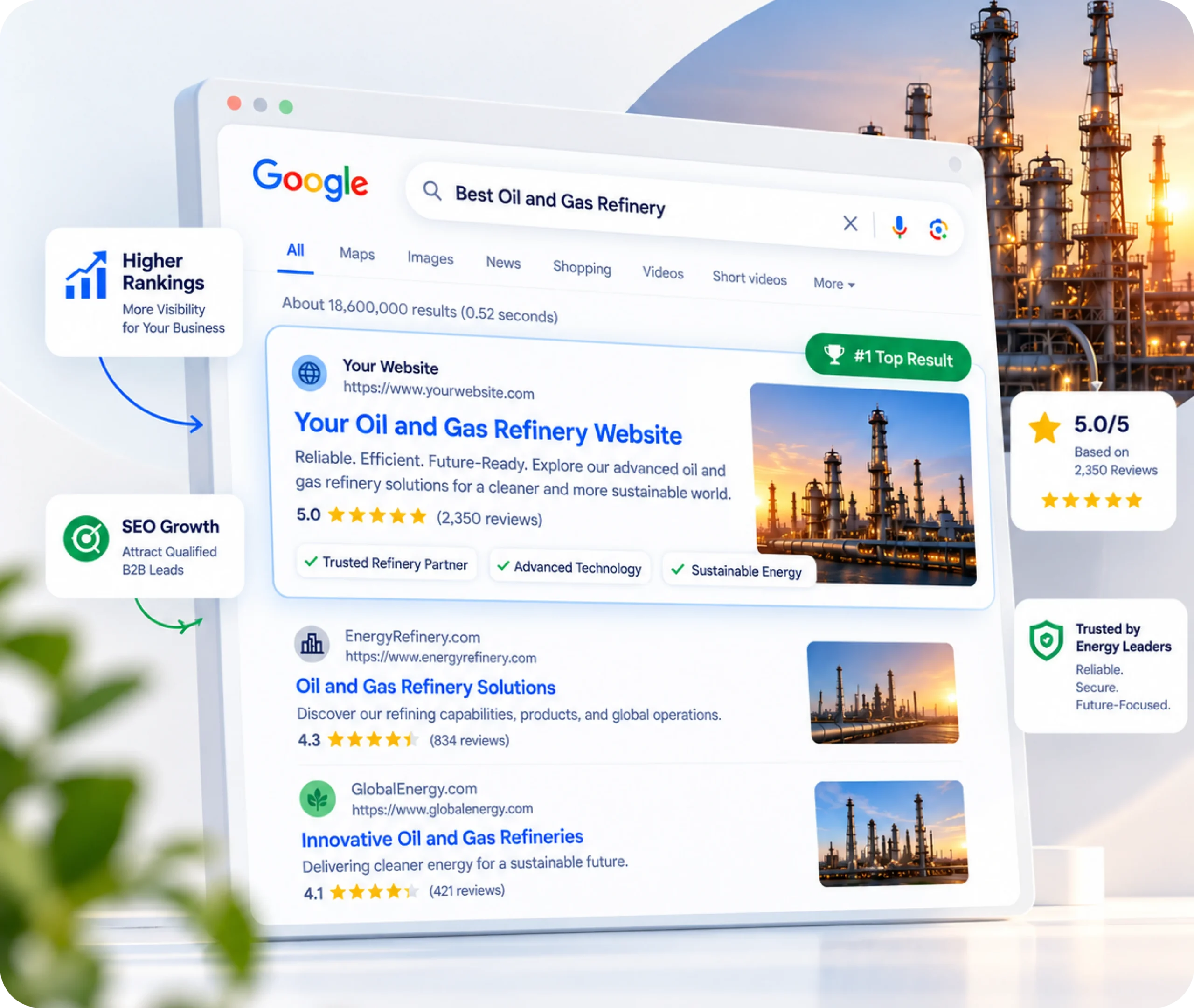
Oil and gas SEO helps energy companies improve their visibility when potential buyers search for specific services, equipment, capabilities, and operating locations.
Visibility
Relevance
Measurement
Our Capabilities
- Business Goal Discovery
- Keyword and Intent Research
- Website Structure Planning
- Technical SEO Audits
- Purposeful Content Optimization
- Local Search Optimization
- Authority and Migration SEO

Specialized SEO Strategy
SEO That Supports Oil and Gas Business Goals
Oil and gas SEO connects your services with relevant search demand through research, technical improvements, useful content, and ongoing measurement.
01
What Does Oil and Gas SEO Include?
Oil and gas SEO covers the work needed to help search engines understand your business and help potential buyers discover relevant services. It includes keyword research, site structure, content optimization, technical SEO, and authority building, guided by your business objectives.
02
Why Does SEO Matter for Energy Companies?
Oil and gas buyers often research specialized services before contacting a supplier or service provider. If your website does not address their search intent clearly, relevant opportunities may be harder to discover. A focused SEO strategy can improve the visibility and accessibility of important business information.
03
How Does SEO Address Visibility Problems?
The process begins by understanding your business goals and measuring existing performance. Research identifies relevant searches, while audits help uncover issues affecting visibility. Content, site structure, technical improvements, and conversion reviews then address priorities based on their potential business impact.
04
Who Can Benefit From SEO for Oil and Gas?
SEO for oil and gas can be relevant to oilfield service providers, energy service companies, equipment suppliers, fabricators, pipeline contractors, inspection businesses, operators, refiners, and distributors. The strategy should reflect each company’s actual services, target buyers, markets, and locations.
Our Approach
Qrolic follows a structured, 13-stage SEO process that starts with business goals and measurement. It progresses through research, site structure, audits, content, technical and local SEO, conversion improvements, authority building, ongoing optimization, and redesign or migration protection.
Benefits
Build Better Search Visibility for Your Business
A focused SEO strategy helps connect your website with relevant buyer searches. Its value depends on your market, website condition, competition, and continued improvement.

Reach Relevant Buyers
Target searches related to your actual services and capabilities. Keyword research helps distinguish relevant buyer intent from broad, unrelated traffic.

Measure Enquiries
Set up analytics, Search Console, and conversion tracking before optimization. This helps you understand where website enquiries and leads originate.

Improve Service Discovery
Organize service, capability, and location pages clearly. A better structure helps visitors and search engines find relevant business information.

Address SEO Issues
Review on-page, technical, local, off-page, and security-related SEO concerns. Prioritize improvements according to their potential impact.

Support Enquiry Generation
Review calls to action, trust signals, and page layouts. Clearer enquiry paths may help more relevant visitors take the next step.

Maintain Search Visibility
Monitor performance and refine the strategy over time. Migration planning also helps reduce avoidable visibility risks during website changes.
Make Your SEO Strategy More Measurable
Free UX Audit
Start with your business priorities, identify relevant search opportunities, and build an SEO plan around measurable objectives.

Our SEO Workflow
9 Steps to Stronger Search Visibility
Our 13-stage SEO process follows your business goals from research to ongoing improvement. Results depend on competition, website condition, and time, so outcomes cannot be guaranteed.
01
Goals and Measurement
02
Search Demand
03
Search-Friendly Structure
04
SEO Problem Solving
05
Content and On-Page SEO
06
Technical and Local Visibility
07
Conversion and Authority
08
Ongoing Growth and Protection
Step 01
Start With Your Business Goals
Share your services, markets, locations, and objectives. This gives the SEO strategy a clear business direction.
Step 02
Make Every Result Measurable
Set up analytics, Search Console, and conversion tracking. Establish a basis for understanding enquiries and SEO performance.
Step 03
Find the Searches That Matter
Research keywords, search demand, and buyer intent. Prioritize searches related to your services and target markets.
Step 04
Build a Website That Search Engines Can Understand
Plan service pages, URLs, topics, and internal links. A clear structure makes relevant information easier to discover.
Step 05
Find and Fix SEO Problems
Audit on-page, technical, local, off-page, and security factors. Prioritize issues according to their potential impact.
Step 06
Create Content With a Purpose
Develop content around search intent and the buyer journey. Then improve existing pages through better titles, headings, structure, links, images, and schema.
Step 07
Strengthen Your Technical Foundation
Review crawlability, indexing, speed, Core Web Vitals, mobile performance, redirects, canonicals, and sitemaps. Address technical barriers to search visibility.
Step 08
Increase Visibility in Local Searches
Where relevant, review Google Business Profile, local pages, citations, and reviews. Support discovery in the locations your business serves.
Step 09
Improve Conversions, Authority, and Continuity
Review enquiry paths, build website authority through backlinks, digital PR, brand mentions, and citations, and continue monitoring performance. During redesigns or migrations, plan redirects, preserve URLs, compare performance, and audit the new site.
Comparison
Oil and Gas SEO Built Around Business Priorities
A generic SEO approach may overlook the specific services and buying considerations of energy businesses. A focused strategy connects research, technical work, and measurement to your business goals.
Without Qrolic:
Without Qrolic :
- Broad keywords, unclear intent
- Business goals not clearly defined
- Tracking added after optimizing
- Service pages lack clear structure
- Technical issues lack priorities
- Enquiry paths not reviewed
- Limited ongoing refinement
With Qrolic:
With Qrolic :
- Research based on search intent
- Strategy starts with objectives
- Measurement set before optimizing
- Clear service, topic, URL planning
- SEO issues ranked by impact
- CTAs and trust signals reviewed
- Continuous monitoring and iteration
Case Studies
An SEO Process Focused on Business Goals
Qrolic follows a structured SEO workflow covering research, technical improvements, and conversion reviews. Verified oil and gas case studies are not available for publication in this brief.

WordPress Performance Optimization Case Study – Active Steel Forge Speed & SEO Improvement
Overview Active Steel Forge had a highly data-heavy WordPress website…

Highland Transfers Website Redesign & Development & SEO Optimization
Overview Highland Transfers is a professional transportation service offering reliable…

Diamond DJ Entertainment Website Design & Development
Overview Diamond DJ Entertainment is a professional event entertainment service…

SEO-Optimized Website for Design Agency – Vini Infotech
Overview Vini Infotech is a graphic design and creative solutions…
Why Choose Qrolic
A Structured SEO Process for Energy Businesses
Oil and gas SEO requires relevant search targeting, technical attention, and clear measurement. Qrolic’s 13-stage workflow connects these with your business objectives and ongoing improvement.
0+
Years of WordPress
Delivering top-tier digital services across design, development, and performance.
0+
Happy Clients
Serving global brands with a 95%+ satisfaction rate across industries.

0%
Client satisfaction
We’re committed to delivering solutions that truly make an impact.
0+
Team members
A strong team of experts in WordPress, web technologies, and UI/UX.
Discuss Your SEO Goals
Let’s Plan Your Oil and Gas SEO Strategy
Tell us about your business, services, and search visibility challenges. Start a conversation about an SEO approach aligned with your business objectives.
Curious About the Cost? Free
Our website cost calculator is built using real
project data – no guesswork, just honest pricing.


Curious About the Cost? Free
Just drop your requirements on WhatsApp, and we’ll send you an instant estimate—no forms, no waiting.
Frequently Asked Questions
Common Questions About Oil and Gas SEO
Understand what SEO involves, how the process works, and what to consider before choosing an SEO service for your business.
What Is Oil and Gas SEO?
Oil and gas SEO is the process of improving a company’s website visibility in search engines for relevant services, equipment, capabilities, and locations. It combines keyword research, content optimization, technical SEO, site structure, and performance measurement to help relevant buyers discover business information.
Why Do Oil and Gas Companies Need SEO?
Potential customers may use search engines to research suppliers, contractors, and specialized services before making contact. SEO can help companies make their capabilities easier to discover and understand. Its value depends on search demand, competition, website condition, and the relevance of the content.
What Do Oil and Gas SEO Services Include?
Oil and gas SEO services can include business goal discovery, keyword research, website structure planning, SEO audits, content optimization, technical improvements, and local SEO where relevant. The process also covers conversion reviews, authority building, ongoing monitoring, and SEO protection during website redesigns or migrations.
How Is SEO for Oil and Gas Different From General SEO?
SEO for oil and gas needs to account for specialized services, technical terminology, relevant buyer intent, and the markets a business serves. Rather than targeting broad industry terms alone, the strategy should reflect specific capabilities and organize information around the needs of potential customers.
How Long Does Oil and Gas SEO Take?
There is no fixed timeline for SEO results. Progress depends on factors such as competition, the website’s current condition, technical issues, and the work required. The process begins with measurement and prioritization, then uses ongoing monitoring to evaluate performance and guide improvements.
Can SEO Help During a Website Redesign?
Yes. Website migration SEO planning can help reduce the risk of losing search visibility during a redesign or migration. The process includes redirect planning, URL preservation, before-and-after performance comparisons, and an audit of the new site. These measures reduce avoidable risks but cannot guarantee unchanged rankings.