Waste Management SEO Services That Drive Visibility
Struggling to attract customers through search? Our waste management SEO services focus on visibility, qualified traffic, and measurable progress through a structured process.
Trusted by large companies worldwide













Introduction
Help More Customers Find Your Waste Business
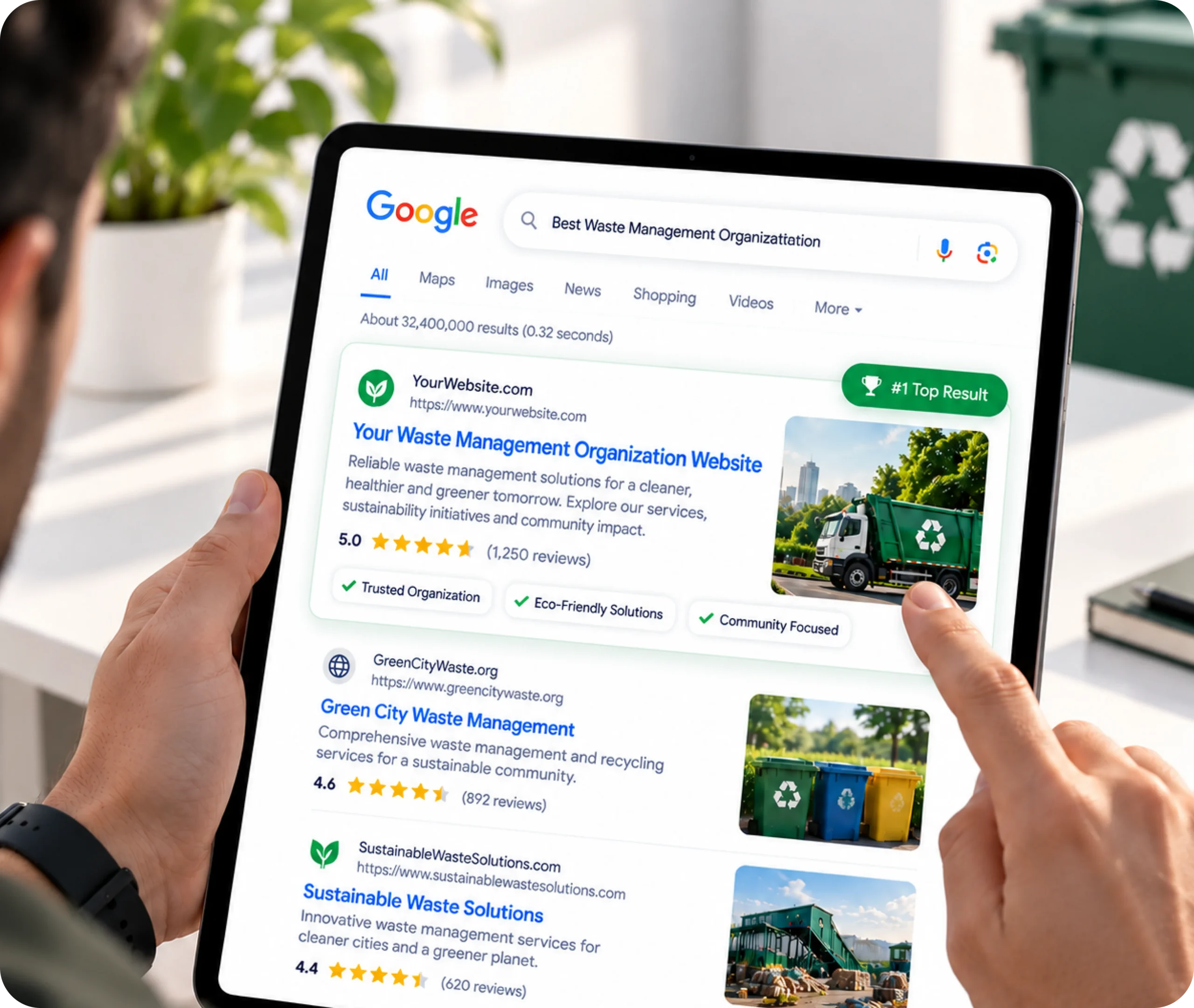
Waste management SEO helps your business appear for relevant searches, connect with potential customers, and turn organic website traffic into enquiries through a structured, measurable strategy.
Visibility
Measurement
Growth
Our Capabilities
- Business Goal Alignment
- Keyword and Competitor Research
- Technical SEO Improvements
- Local Search Optimization
- Purposeful Content Creation
- Conversion Tracking and Review
- Ongoing SEO Monitoring

Waste SEO Strategy
A Complete SEO Approach for Waste Businesses
Our waste management SEO services follow a structured process that connects business goals, search visibility, website improvements, and ongoing measurement to help guide marketing decisions.
01
What Does Waste Management SEO Include?
Waste management SEO covers research, website audits, content optimization, technical improvements, local SEO, conversion reviews, authority building, and ongoing monitoring. The work begins with business goals and measurement, then addresses the search and website issues that may limit visibility. The scope follows the supplied 13-stage workflow.
02
Why Does SEO Matter for Waste Businesses?
Potential customers search online when they need waste collection, disposal, recycling, or related services. If your website does not appear for relevant searches, those customers may discover another provider instead. SEO helps improve your visibility and gives you a clearer way to evaluate organic traffic and enquiries.
03
How Does the SEO Process Solve These Problems?
The process begins by defining business goals and setting up measurement. Keyword and competitor research identifies relevant searches, while site structure, content, on-page optimization, and technical SEO address different visibility issues. Local SEO is included where relevant. Conversion reviews and ongoing monitoring help assess progress and identify further improvements.
04
Who Can Benefit From Waste Company SEO Services?
Businesses seeking more visibility through organic search can use SEO to improve how customers discover their services. This approach is relevant to waste management companies that want clearer measurement, better-organized website content, or stronger local search visibility. The specific priorities depend on the business goals, existing website, and target market.
Our Approach
Qrolic’s process starts with your business goals and makes results measurable before optimization begins. It then progresses through research, website structure, audits, content, technical and local SEO, conversion review, authority building, and monitoring. When a redesign or migration is planned, the process includes steps to protect SEO visibility.
Benefits
Build a Stronger Foundation for Organic Growth
A structured SEO strategy helps you focus on relevant searches and understand how your website performs. Progress is monitored so priorities can evolve.

Reach Relevant Customers
Keyword and competitor research identifies searches related to your business goals. This helps focus your SEO efforts on relevant customer intent.

Measure What Matters
Analytics, Google Search Console, and conversion tracking help establish a measurement baseline. You can better understand how organic search contributes to enquiries.

Improve Website Structure
Clear site structure and internal linking help users and search engines navigate your content. Relevant pages become easier to discover and understand.

Address Technical Issues
Technical SEO reviews crawling, indexing, speed, mobile usability, and related issues. Prioritized improvements help strengthen the website’s technical foundation.

Strengthen Local Visibility
Local SEO can include Google Business Profile, local pages, citations, and reviews. These activities help improve discoverability in relevant service areas.

Support Ongoing Improvement
Monitoring tracks search visibility, traffic, conversions, competitors, and algorithm changes. These insights help inform future SEO priorities and adjustments.
Ready to Improve Your Waste Business Visibility?
Free Waste Management SEO Audit
Start with your business goals and identify where SEO can support your next stage of growth.

Our SEO Workflow
Our 13-Stage SEO Process
Each stage addresses a different part of organic search performance, from planning and measurement to ongoing improvement. SEO is an ongoing growth system; results depend on your website and market.
01
Start With Your Business Goals
02
Make Every Result Measurable
03
Find the Searches That Matter
04
Build a Website That Search Engines Can Understand
05
Find and Fix SEO Problems
06
Create Content With a Purpose
07
Turn Existing Pages Into Better Search Results
08
Strengthen Your Technical Foundation
09
Increase Visibility in Local Searches
10
Turn More Visitors Into Customers
11
Build Your Website’s Authority
12
Keep Improving Your Growth
13
Protect SEO During a Redesign or Migration
Step 01
Start With Your Business Goals
We begin by understanding your business priorities, services, locations, and competitors. This gives the SEO strategy a clear direction.
Step 02
Make Every Result Measurable
Analytics, Google Search Console, and conversion tracking establish a measurement baseline. This helps you understand traffic and enquiry sources.
Step 03
Find the Searches That Matter
Keyword, competitor, and search-intent research identifies relevant opportunities. The findings help prioritize searches that align with your business goals.
Step 04
Build a Website That Search Engines Can Understand
We review website structure, URLs, topics, and internal links. A clear structure helps visitors and search engines find relevant information.
Step 05
Find and Fix SEO Problems
The SEO audit reviews on-page, technical, local, off-page, and security issues. Prioritizing problems helps focus effort where improvements are needed.
Step 06
Create Content With a Purpose
Content is planned around customer questions and search intent. Relevant information helps potential customers understand your services at different stages.
Step 07
Turn Existing Pages Into Better Search Results
Existing pages are reviewed for titles, headings, structure, links, images, and schema. These improvements help align pages with relevant searches.
Step 08
Strengthen Your Technical Foundation
Technical SEO addresses crawling, indexing, speed, Core Web Vitals, mobile usability, and related issues. This helps search engines access and understand your pages.
Step 09
Increase Visibility in Local Searches
For local businesses, this stage covers Google Business Profile, local pages, citations, and reviews. It supports discoverability in relevant service areas.
Step 10
Turn More Visitors Into Customers
The conversion review examines user experience, calls to action, trust signals, and layouts. The goal is to identify opportunities to turn visits into enquiries.
Step 11
Build Your Website’s Authority
Authority-building activities include backlinks, digital PR, brand mentions, and citations. These efforts support the development of your website’s credibility over time.
Step 12
Keep Improving Your Growth
Ongoing monitoring tracks rankings, traffic, conversions, competitors, and algorithm changes. These observations help guide future SEO priorities.
Step 13
Protect SEO During a Redesign or Migration
When a website is redesigned or migrated, the process includes redirect planning, URL preservation, before-and-after comparisons, and a post-launch audit. These measures help reduce the risk of losing search visibility.
Comparison
Waste Management SEO Built Around Business Goals
A basic SEO approach may overlook measurement, technical issues, and ongoing improvement. A structured process considers these areas together to guide more informed decisions.
Other Agencies
Without Qrolic :
- Goals lack clear SEO priorities.
- Lead sources hard to measure.
- Keywords may lack intent research.
- Structure may be hard to navigate.
- Technical issues may go unseen.
- Content may not answer questions.
- Progress may lack monitoring.
Qrolic Technologies
With Qrolic :
- SEO starts with business goals.
- Tracking sets measurement baseline.
- Research finds relevant searches.
- Structure and links get attention.
- Audits prioritize SEO issues.
- Content follows search intent.
- Monitoring guides improvements.
Case Studies
Understanding SEO Through a Structured Process
Every waste business has different goals and search challenges. No verified waste management case studies, client results, or testimonials were supplied for this page.

WordPress Performance Optimization Case Study – Active Steel Forge Speed & SEO Improvement
Overview Active Steel Forge had a highly data-heavy WordPress website…
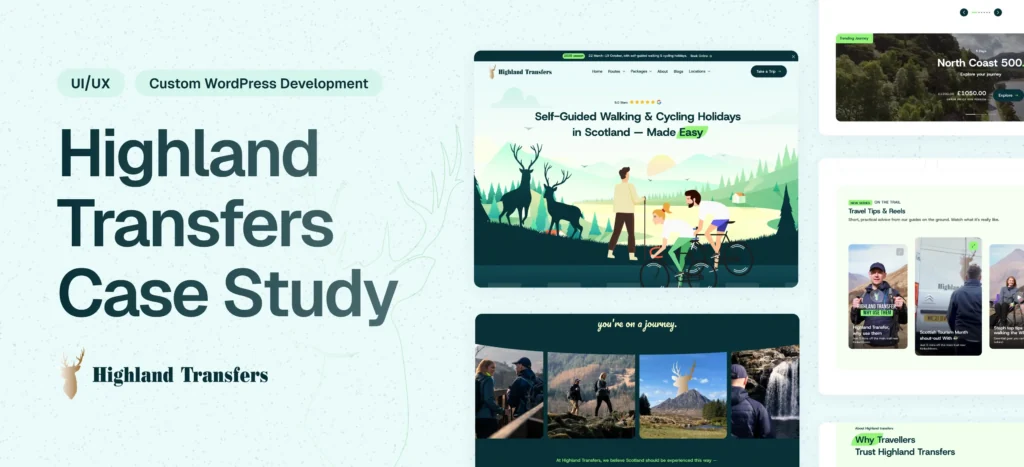
Highland Transfers Website Redesign & Development & SEO Optimization
Overview Highland Transfers is a professional transportation service offering reliable…

Diamond DJ Entertainment Website Design & Development
Overview Diamond DJ Entertainment is a professional event entertainment service…

SEO-Optimized Website for Design Agency – Vini Infotech
Overview Vini Infotech is a graphic design and creative solutions…
Why Choose Qrolic
A Measurable SEO Process for Waste Businesses
Qrolic’s approach connects business goals with measurement, technical and content improvements, and ongoing monitoring. The structured workflow helps keep SEO priorities clear and reviewable.
0+
Years of WordPress
Delivering top-tier digital services across design, development, and performance.
0+
Happy Clients
Serving global brands with a 95%+ satisfaction rate across industries.

0%
Client satisfaction
We’re committed to delivering solutions that truly make an impact.
0+
Team members
A strong team of experts in WordPress, web technologies, and UI/UX.
Waste Management SEO Packages
Our Waste Management SEO Packages
Choose the perfect SEO plan for your junk removal or recycling company. Each package is designed to boost local rankings and deliver a clear return on investment.
Basic SEO Plan
Local businesses or startups
10 keywords$150-$200/month
- Site audit and on-page fixes
- Google Business Profile setup
- Monthly reporting
- Basic keyword optimization
- Local citation building
Growth SEO Plan
Small to mid-sized businesses
20+ keywords$250-$350/month
- Content creation and optimization
- Technical SEO improvements
- Link-building campaigns
- Conversion tracking setup
- Advanced reporting dashboard
Pro SEO Plan
National or highly competitive websites
40+ keywords$600+/month
- Premium content strategy
- Advanced technical SEO
- Conversion rate optimization
- Priority support
- Comprehensive analytics
Custom SEO Plan
Enterprise & Niche Clients
Fully tailored SEO strategy with dedicated team and advanced analytics
Premium Features
- Dedicated SEO team (5-8 specialists)
- Custom analytics dashboard
- International/multi-location SEO
- Technical CRO integration
- Advanced competitor intelligence
- White-label reporting options
Join 70+ enterprise clients who trust Qrolic for their SEO success
Start a Conversation
Let’s Discuss Your Waste SEO Goals
Tell us about your business, website, and search visibility goals. This gives the conversation a starting point for understanding your SEO priorities.
Curious About SEO Pricing? Free Quote
Request a custom proposal based on your specific
goals—no guesswork, just transparent pricing.


Curious About SEO Pricing? Free Quote
Request a custom proposal based on your specific
goals—no guesswork, just transparent pricing.
Waste Management SEO Questions Answered
Waste Management SEO Questions Answered
Explore how SEO works for waste businesses, what the process covers, and how progress can be evaluated. These answers explain the approach without promising specific rankings or results.
What Is Waste Management SEO?
Waste management SEO is the process of improving a waste business’s visibility in organic search results. It can include keyword research, website audits, content optimization, technical SEO, local SEO, and performance monitoring. The aim is to help relevant customers discover the business through search.
Why Do Waste Businesses Need SEO?
Customers often search online when they need a waste-related service. If your website is difficult to find or understand, you may miss relevant enquiries. SEO helps address visibility issues, improve website content, and measure how organic search contributes to business goals.
How Does SEO for Waste Management Work?
SEO for waste management follows a structured process. It begins with business goals and measurement, then moves through research, website structure, audits, content, technical SEO, local SEO where relevant, conversion review, authority building, and ongoing monitoring. Redesign or migration protection applies when needed.
Can SEO Help With Local Waste Searches?
Local SEO can help businesses improve their visibility in relevant geographic searches. Depending on the business and its needs, the work may include Google Business Profile, local pages, citations, and reviews. The appropriate priorities depend on the locations served and the existing online presence.
How Can I Measure Waste Management SEO Progress?
Progress can be evaluated using analytics, Google Search Console, and conversion tracking. Monitoring may cover search rankings, organic traffic, conversions, competitors, and algorithm changes. These measurements help you understand performance and identify areas that may need further attention, but they do not guarantee specific outcomes.
Will a Website Redesign Affect My SEO?
A redesign or migration can put search visibility at risk if URLs, redirects, and existing search performance are not considered. Qrolic’s workflow includes redirect planning, URL preservation, before-and-after comparisons, and a post-launch audit when a redesign or migration is planned. Closing statement: Waste management SEO works best as an ongoing process that connects business goals, relevant search visibility, measurable performance, and continuous improvement. Qrolic’s 13-stage workflow provides a structured starting point for that work