SEO for Online Therapist Practices That Builds Visibility
Online therapists need to be found for the right specialties and service areas. Our SEO approach aligns search visibility with client needs.
Trusted by large companies worldwide
















Introduction
Reach Clients Searching for Therapy
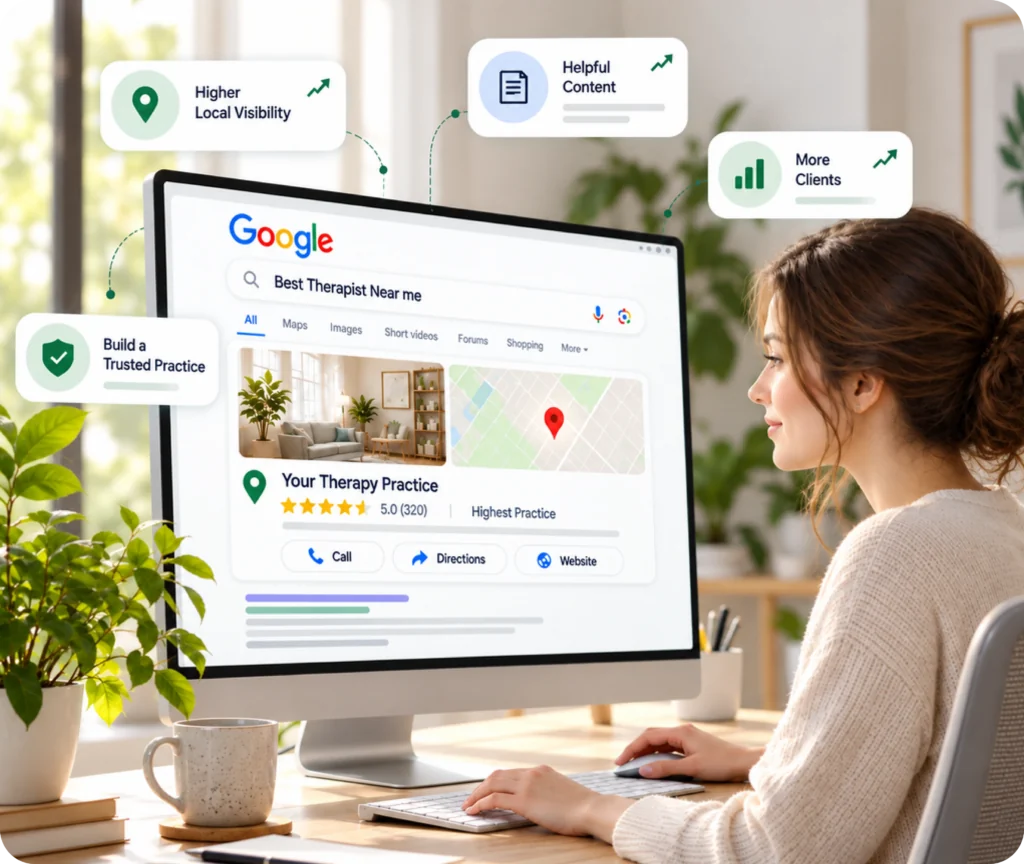
Online Therapist SEO Services help therapists improve visibility for searches related to online therapy, specialties, modalities, and licensed service regions.
Visibility
Relevance
Trust
Our Capabilities
- Online Therapy SEO Strategy
- Specialty Keyword Research
- Search Intent Content
- On-Page SEO Optimization
- Technical SEO Improvements
- State-Based Local SEO
- Conversion Optimization

Online Therapy SEO
SEO Built Around Online Therapy
Online therapy searches can be specific, urgent, and highly focused. Qrolic’s approach connects specialty searches, website structure, technical SEO, and conversion considerations.
01
What Does the Service Include?
SEO for online therapist practices covers search strategy around therapy specialties, modalities, client concerns, and licensed service regions. The service includes keyword research, purposeful content, on-page improvements, technical SEO, local SEO, conversion optimization, authority building, and ongoing monitoring.
02
Why Does Online Therapist SEO Matter?
Prospective clients may search for a specific type of support rather than simply searching for a therapist. SEO for online therapy services helps create a more relevant path between those searches and the practice’s own website, while trust and confidentiality considerations remain important.
03
How Does It Solve Visibility Problems?
The process identifies relevant search demand and connects it with appropriate website pages and content. Specialty pages, internal links, technical improvements, and state-based targeting can make the website more relevant to searches for specific therapy needs.
04
Who Are These Services For?
The service is designed for licensed therapists, counsellors, psychologists, and psychiatric practitioners who deliver services online. It can also support group teletherapy practices and mental health clinics that are adding an online offering.
Our Approach
Qrolic starts with business goals, then works through tracking, keyword research, site structure, auditing, content, on-page and technical SEO, local SEO, conversion optimization, authority building, monitoring, and redesign or migration protection.
Benefits
Benefits of Focused Therapist SEO
A focused SEO strategy connects your website with relevant searches. It also considers the trust sensitivity of mental health services.

Specialty Visibility
Target searches around specific therapy needs, modalities, and client concerns rather than relying only on broad therapist terms.

Better Search Relevance
Create pages and content that directly address what prospective clients are searching for before making contact.

State-Based Targeting
Structure local SEO around the states or regions where an online therapist is licensed to provide services.

Clearer User Paths
Improve website structure, internal links, trust signals, and calls to action so visitors can find relevant information.

Technical Foundations
Address areas such as mobile usability, site speed, redirects, and other technical SEO considerations that affect search access.

Ongoing Improvement
Monitor search performance and continue iterating as specialty demand, search behavior, and competition change.
Make Your Therapy Practice Easier to Find
Free UX Audit
Build an SEO approach around your specialties, audience, and licensed service regions.

Our Process
How Therapist SEO Works
The Qrolic SEO workflow connects business goals, search research, website improvements, content, and ongoing optimization.
01
Goal-First Strategy
02
Tracking Setup
03
Keyword Research
04
Site Structure & Audit
05
Content & On-Page SEO
06
Technical & Local SEO
07
Conversion & Authority
08
Monitoring & Protection
Step 01
Goal-First Strategy
We consider specialties, licensed states, and ideal clients before shaping the SEO direction. This keeps the strategy tied to practice goals.
Step 02
Tracking Setup
Tracking focuses on consultations and enquiries. This helps connect search activity with meaningful client contact.
Step 03
Keyword Research
We research specialty, modality, and concern-based searches. The goal is to understand what prospective clients are actually looking for.
Step 04
Site Structure & Audit
Site structure, internal links, and SEO issues are reviewed together. This helps relevant pages become easier to discover and navigate.
Step 05
Content & On-Page SEO
Purposeful content answers client questions while on-page improvements strengthen titles, headings, schema, and internal linking around relevant searches.
Step 06
Technical & Local SEO
Technical work considers speed, mobile usability, and related issues. Local SEO supports state and regional targeting for licensed online therapists.
Step 07
Conversion & Authority
Conversion optimization considers UX, CTAs, trust signals, and layout. Authority building uses appropriate backlinks, digital PR, and citations.
Step 08
Monitoring & Protection
Ongoing monitoring supports continued iteration. Redesign or migration protection helps preserve URLs and visibility when platforms or website structures change.
Comparison
Why Focused SEO Matters for Therapists
General marketing can overlook specialty searches, licensing boundaries, and the trust sensitivity of mental health services. Focused SEO addresses these considerations within the online therapy context.
Without Qrolic:
Without Qrolic :
- Broad therapist keyword targeting
- Generic content topics
- Limited specialty page focus
- Unclear state targeting
- Technical issues remain unnoticed
- Trust signals may be overlooked
- Limited ongoing SEO iteration
With Qrolic:
With Qrolic :
- Specialty-focused keyword research
- Client-question content planning
- Dedicated specialty page optimization
- State and region targeting
- Technical SEO review
- Trust-focused conversion considerations
- Ongoing monitoring and iteration
Case Studies
Evidence Should Come From Verified Work
Qrolic’s supplied brief does not provide verified therapist case studies, results, testimonials, or performance metrics for this service. No unsupported examples are presented here.

Premium Digital Experience That Matches OAKA’s Luxury Flooring Standards
Overview OAKA is a premium luxury flooring brand focused on…

Family Guidance Association of Ethiopia (FGAEET) Website Transformation Case Study | Scalable Healthcare Platform
Delivered a modern, high-performance website with structured content and improved…

Empowering India’s Skilling Movement — Navriti Website Redesign
Navriti Technologies is leading India’s skilling and employability movement. But…
Why Choose Qrolic
A Focused SEO Approach for Therapists
Qrolic’s approach is built around online therapy search behavior, specialty needs, state targeting, trust considerations, and ongoing SEO improvement.
0+
Years of WordPress
Delivering top-tier digital services across design, development, and performance.
0+
Happy Clients
Serving global brands with a 95%+ satisfaction rate across industries.

0%
Client satisfaction
We’re committed to delivering solutions that truly make an impact.
0+
Team members
A strong team of experts in WordPress, web technologies, and UI/UX.
Start the Conversation
Build a More Focused SEO Strategy
Your therapy practice has specific specialties, audiences, and service regions. Start with an SEO approach built around those search needs.
Curious About the Cost? Free
Our website cost calculator is built using real
project data – no guesswork, just honest pricing.


Curious About the Cost? Free
Just drop your requirements on WhatsApp, and we’ll send you an instant estimate—no forms, no waiting.
Frequently Asked Questions
Questions About Therapist SEO
SEO for online therapist practices requires careful attention to search intent, specialty visibility, state licensing, and trust. Here are common questions about the service.
Does SEO work for online therapists?
SEO can help online therapists improve visibility for relevant searches, including specialty, modality, concern-based, and state-related queries. Results depend on factors such as search demand, competition, website condition, and ongoing implementation.
Can SEO target specific therapy specialties?
Yes. The supplied Qrolic approach includes keyword research around specialties, modalities, and client concerns. It can support content and service pages focused on areas such as anxiety, couples, teens, or trauma when those services are offered by the practice.
How is online therapist SEO different?
Online therapist SEO focuses specifically on teletherapy search behavior and the needs of online practices. It can include specialty-level targeting, state-based SEO for licensed regions, technical improvements, trust considerations, and conversion-focused website optimization.
What does local SEO for therapists mean?
For this service, local seo for therapists is framed around state or regional targeting for online therapists who are licensed to serve those areas. It is not intended to turn the page into a general in-person therapist local SEO service.
How does SEO support therapy website conversions?
Conversion optimization considers the user experience, calls to action, trust signals, and page layout. The goal is to make the path toward contacting or booking with the practice clearer, without presenting enquiries or bookings as guaranteed outcomes.
Does Qrolic provide SEO for online therapy services?
Yes. The approved service scope covers seo for online therapy services, including search strategy, keyword research, content, on-page SEO, technical SEO, state-based local SEO, conversion optimization, authority building, and ongoing monitoring.