Higher Education SEO That Supports Enrollment Growth
Education institutions need more than website traffic. Qrolic builds focused SEO strategies that help prospective students discover programs, explore institutions, and make informed decisions.
Trusted by large companies worldwide.











Introduction
Education SEO Built Around Student Search Intent
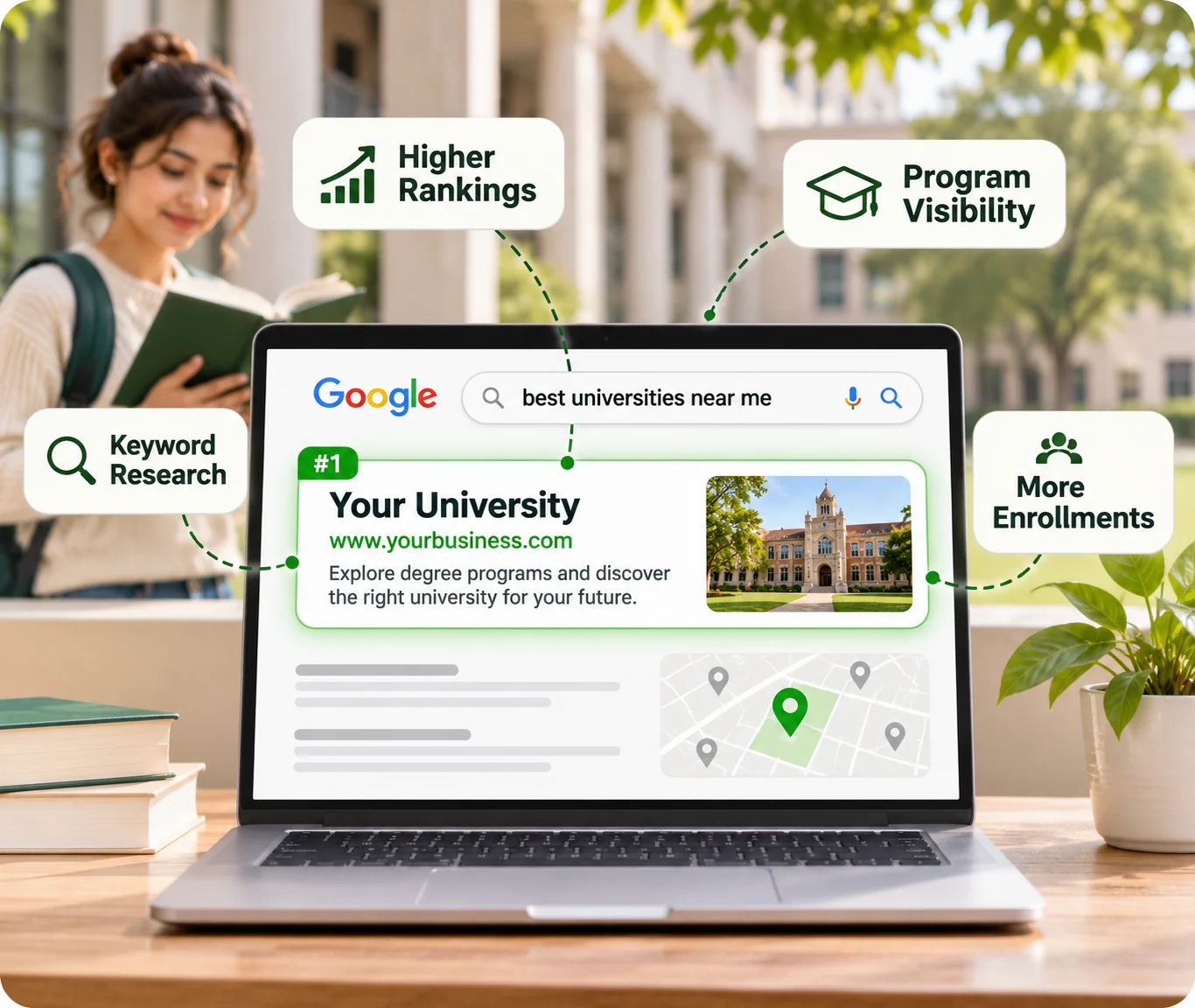
Higher education SEO helps institutions improve search visibility, connect with prospective students, and support enrollment goals through technical work, relevant content, and focused optimization.
Visibility
Relevance
Growth
Our Capabilities
- Education Keyword Research
- On-Page SEO Optimization
- Technical SEO Improvements
- Local Search Optimization
- Content Strategy Development
- Authority Building
- Analytics and Reporting

Education SEO Services
A Search Strategy That Supports Enrollment
Education institutions compete for attention across programs, locations, and online learning. A focused SEO strategy helps prospective students find what each institution offers.
01
What Do Education SEO Services Include?
Education SEO services cover keyword research, on-page optimization, technical SEO, local SEO, content strategy, and authority building. Work begins with your institutional goals, audiences, competitors, and search opportunities.
02
Why Does SEO Matter for Education?
Prospective students compare institutions, programs, faculty, and outcomes before deciding. Strong visibility helps institutions appear during that research, and SEO in higher education addresses competing pages and unanswered student questions.
03
How Does the Strategy Improve Visibility?
Qrolic combines education keyword research with technical audits, content optimization, and internal linking improvements. Education website SEO helps search engines find key pages, while analytics and conversion tracking help evaluate inquiries.
04
Who Can Benefit From This Service?
The service supports universities, colleges, schools, training providers, and education technology organizations. Higher education marketing teams can improve program discovery, while STEM education marketing can target subject-specific searches.
Our Approach
Qrolic starts with institutional goals and sets up analytics, Search Console, and conversion tracking before optimization. The team researches search intent, audits the website, prioritizes improvements, and monitors performance to guide decisions.
Benefits
Build Visibility That Supports Student Enrollment
Education SEO connects relevant searches with useful institutional information. It helps teams make informed decisions about visibility, website improvements, and inquiry generation.

Reach Relevant Audiences
Target searches connected to programs, courses, and locations. Help prospective students discover relevant institutional information.

Improve Program Visibility
Make priority program pages easier to discover. Organize content around the searches prospective students actually use.

Reduce Internal Competition
Improve website structure and internal linking. Help search engines understand which institutional pages matter most.

Strengthen Technical Foundations
Address crawlability, indexing, speed, and mobile usability. Give search engines a healthier foundation for discovering website content.

Support Local Discovery
Improve local visibility through business profiles, location pages, citations, and reviews where applicable.

Measure Meaningful Activity
Track traffic, inquiries, and applications. Use reporting to understand SEO performance beyond rankings alone.
Make Your Institution Easier to Discover
Free UX Audit
Understand where your search visibility can improve and which opportunities deserve attention first.

Our SEO Workflow
How Our SEO Process Works
A structured process connects institutional goals with measurable improvements. Each stage builds on the work completed before it.
01
Understand Your Goals
02
Establish Measurement
03
Research Search Opportunities
04
Organize Website Content
05
Audit and Prioritize
06
Improve Content and Pages
07
Strengthen Technical and Local SEO
08
Improve Conversions and Authority
09
Monitor and Protect Performance
Step 01
Understand Your Goals
We learn about your institution, audience, services, locations, competitors, and objectives. This gives the SEO strategy a clear direction.
Step 02
Establish Measurement
Analytics, Search Console, and conversion tracking are configured before optimization. Your team can measure activity from the beginning.
Step 03
Research Search Opportunities
We examine competitors, search demand, keyword intent, and relevant opportunities. Education keyword research maps searches to programs, courses, and locations.
Step 04
Organize Website Content
We review page structure, URLs, content topics, and internal links. A clearer structure helps search engines understand priority pages.
Step 05
Audit and Prioritize
We assess on-page, technical, local, off-page, and security issues. Recommendations are prioritized by impact so important improvements receive attention first.
Step 06
Improve Content and Pages
We plan content around audience questions and search intent. Titles, headings, page structure, internal links, images, and schema are optimized on priority pages.
Step 07
Strengthen Technical and Local SEO
We address crawlability, indexing, site speed, Core Web Vitals, mobile usability, redirects, canonicalization, and sitemaps. Where relevant, local SEO supports discovery around physical campuses.
Step 08
Improve Conversions and Authority
We review user experience, calls to action, trust signals, and conversion opportunities. Authority-building work includes quality backlinks, digital PR, brand mentions, and relevant citations.
Step 09
Monitor and Protect Performance
We monitor rankings, traffic, conversions, competitors, and algorithm changes. For redesigns or migrations, redirect planning and URL preservation help protect existing search visibility.
Comparison
Higher Education SEO Beyond Generic Optimization
General SEO approaches may overlook institutional search behavior and enrollment priorities. A focused strategy considers education audiences, complex websites, and measurable inquiry goals.
Without Qrolic:
Without Qrolic :
- Generic keyword targeting
- Limited program-level planning
- Competing pages left unresolved
- Technical issues overlooked
- Content without clear intent
- Rankings without conversion context
- Limited ongoing adaptation
With Qrolic:
With Qrolic :
- Education-specific keyword mapping
- Program and course search focus
- Structure and link improvements
- Prioritized technical SEO audits
- Student-intent content planning
- Inquiry and application tracking
- Ongoing monitoring and reporting
Case Studies
Explore Qrolic’s Education SEO Services
Qrolic’s education SEO workflow covers research, optimization, and monitoring. This page does not present unverified client projects, testimonials, or performance results.

WordPress Performance Optimization Case Study – Active Steel Forge Speed & SEO Improvement
Overview Active Steel Forge had a highly data-heavy WordPress website…
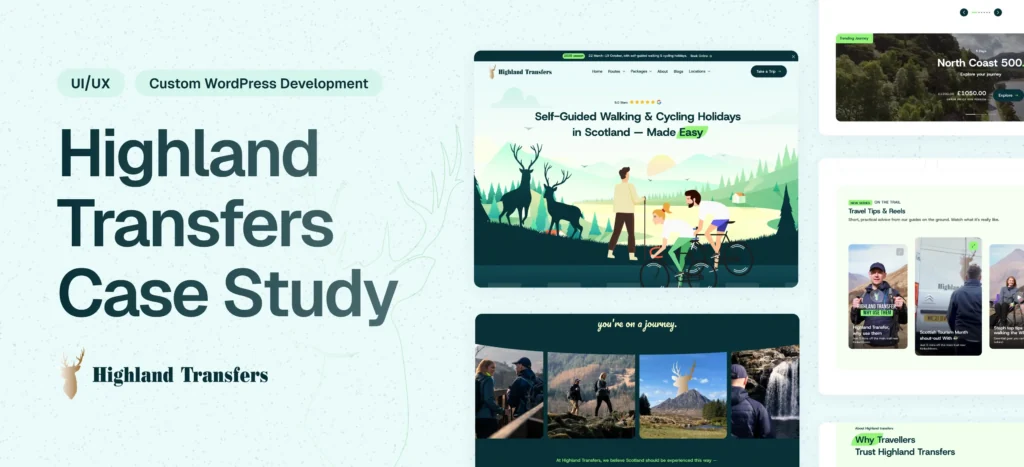
Highland Transfers Website Redesign & Development & SEO Optimization
Overview Highland Transfers is a professional transportation service offering reliable…

Diamond DJ Entertainment Website Design & Development
Overview Diamond DJ Entertainment is a professional event entertainment service…

SEO-Optimized Website for Design Agency – Vini Infotech
Overview Vini Infotech is a graphic design and creative solutions…
Why Choose Qrolic
An SEO Strategy Connected to Enrollment Goals
Qrolic combines education-focused search planning with measurement, technical improvements, and ethical optimization. Reporting looks beyond rankings to inquiries and applications.
0+
Years of WordPress
Delivering top-tier digital services across design, development, and performance.
0+
Happy Clients
Serving global brands with a 95%+ satisfaction rate across industries.

0%
Client satisfaction
We’re committed to delivering solutions that truly make an impact.
0+
Team members
A strong team of experts in WordPress, web technologies, and UI/UX.
Start a Conversation
Let’s Discuss Your Education SEO Goals
Tell us about your institution, audience, and search visibility challenges. Qrolic can discuss an SEO approach aligned with your priorities.
Curious About the Cost? Free
Our website cost calculator is built using real
project data – no guesswork, just honest pricing.
 Message on WhatsApp

Curious About the Cost? Free
Just drop your requirements on WhatsApp, and we’ll send you an instant estimate—no forms, no waiting.
Frequently Asked Questions
Education SEO Questions Answered
Understand what the service covers, how the process works, and which improvements may support your institution’s search visibility.
What Is Higher Education SEO?
Higher education SEO improves how universities and colleges appear in search results for relevant programs, courses, and institutional information. It combines keyword research, content optimization, technical improvements, and performance measurement to support student discovery and inquiries.
How Is SEO in Higher Education Different?
SEO in higher education must account for longer student decision journeys, complex websites, competing program pages, and seasonal recruitment periods. The strategy needs to consider student search intent and institutional priorities rather than applying only general SEO practices.
What Does Education Website SEO Include?
Education website SEO can include technical audits, keyword mapping, page titles, headings, content structure, internal links, schema, mobile usability, and indexing improvements. The exact priorities depend on the website’s condition and the institution’s objectives.
Can SEO Support Higher Education Marketing?
Yes. SEO can support higher education marketing by helping prospective students discover relevant programs and institutional information through organic search. Analytics and conversion tracking can also help teams understand how search activity contributes to inquiries and applications.
Can SEO Help With STEM Education Marketing?
SEO can support STEM education marketing by targeting subject-specific and grade-level searches. For example, a provider may need visibility for coding classes, science programs, or mathematics tutoring. Keyword research helps organize these opportunities around relevant audiences.
How Do You Measure Education SEO Performance?
Measurement can include organic traffic, keyword visibility, inquiries, applications, and other enrollment-related activity. Qrolic establishes analytics, Search Console, and conversion tracking before optimization so performance can be evaluated against defined institutional goals.