Magazine Platform Development for Digital Publishing Teams
Magazine publishers need more than a standard website to manage issues, readers, subscriptions, and advertising. Magazine platform development provides publishing-focused infrastructure.
Trusted by large companies worldwide.















Introduction
Build a Digital Foundation for Magazine Publishing
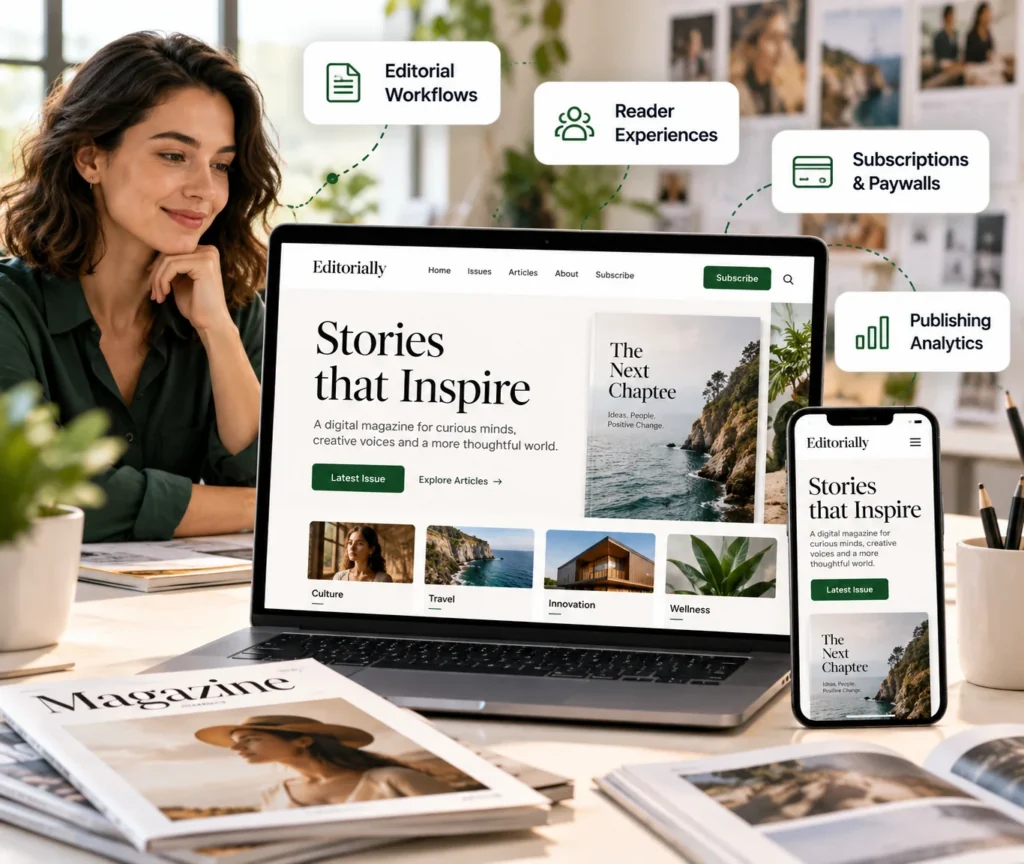
Magazine platform development helps publishers build or modernize digital infrastructure for content production, reader experiences, subscriptions, and publishing operations.
Control
Flexibility
Engagement
Our Capabilities
- Magazine CMS Development
- Issue-Based Content Management
- Responsive Reader Experiences
- Subscription and Paywall Systems
- Advertising System Integration
- Publishing Platform Analytics
- Legacy Content Migration

Magazine Platform Solutions
Magazine Platform Development for Publishers
A magazine platform connects the systems behind publishing with the experience readers use. The right approach depends on your editorial operations, audience, revenue model, and existing technology.
01
What Does Magazine Platform Development Include?
Magazine platform development can cover a web-based reader experience, content management, issue organization, editorial workflows, and publishing integrations. Scope depends on your subscriptions, advertising, analytics, and migration needs.
02
Why Does a Magazine Need a Dedicated Platform?
Generic websites may not support issue-based publishing, contributor relationships, editorial approvals, or subscription access without workarounds. A dedicated digital magazine platform can bring these needs into a publishing-focused structure.
03
How Does the Platform Address Publishing Challenges?
A publishing platform can connect content operations, reader access, monetization systems, and audience measurement. This can reduce fragmented workflows and give publishers more control over how content is managed and delivered.
04
Who Can Benefit From This Service?
Independent publishers, digital-first magazines, trade publications, and media companies can consider a custom platform when existing systems limit their operations. It may also suit publishers replacing PDF editions or restrictive hosting platforms.
Our Approach
The right direction starts with understanding your publishing model and technical requirements. Build-versus-buy considerations, existing systems, reader needs, and long-term ownership should inform the scope before development decisions are made.
Benefits
Build a Platform Around Publishing Needs
A magazine-focused platform can address operational gaps that generic systems may leave unresolved. Its value depends on the requirements and implementation scope.

Publishing-Focused Workflows
Organize issues, sections, features, and contributors around magazine operations. Reduce dependence on workarounds for editorial tasks.

Better Reader Experiences
Offer a responsive, web-native reading experience instead of relying only on PDF replicas or flipbooks. Support interactive content where required.

Connected Subscription Systems
Bring subscription access and billing integrations into the platform scope. Support the subscription model selected for your publication.

More Useful Audience Insights
Page- and section-level analytics can help publishers understand reader activity. Use those insights to inform editorial and product decisions.

Greater Platform Control
Custom development can provide more control over platform functionality and data. Ownership and exit terms should be clearly defined before the engagement.

Room for Future Changes
A flexible platform can accommodate evolving content formats, publishing needs, and integrations. Its architecture should reflect realistic growth requirements.
Is Your Current Magazine Platform Holding You Back?
Free UX Audit
Explore a publishing platform shaped around your editorial operations, reader experience, and business requirements.

Planning Process
Key Stages in Planning Your Platform Project
Magazine platform projects require clear decisions about scope, systems, migration, and ownership. These stages outline key planning considerations.
01
Publishing Requirements
02
Build-versus-Buy Assessment
03
Platform Architecture
04
Development and Integration
05
Testing and Launch Planning
06
Training and Documentation
07
Support and Iteration
Step 01
Publishing Requirements
Identify editorial operations, content types, reader needs, and business goals. This establishes the requirements that should guide platform decisions.
Step 02
Build-versus-Buy Assessment
Compare custom development with suitable magazine hosting platforms. Consider control, differentiation, data ownership, cost, and ongoing maintenance.
Step 03
Platform Architecture
Define the content model, reader experience, and required system connections. Architecture decisions should reflect the publication’s actual workflows and priorities.
Step 04
Development and Integration
Develop the agreed platform components and connect required systems. Scope may include content management, reader functionality, subscriptions, advertising, and migration.
Step 05
Testing and Launch Planning
Validate agreed functionality, content migration, reader access, and platform performance. Prepare the launch around the publication’s operational requirements.
Step 06
Training and Documentation
Plan how the editorial and technical teams will manage the platform. Documentation and knowledge transfer can support independent day-to-day operations.
Step 07
Support and Iteration
Define post-launch maintenance and future improvement needs. Security updates, performance monitoring, and feature changes should have clear ownership.
Comparison
Custom Magazine Platform Development vs Generic Solutions
A general website or ready-made platform may not match magazine publishing requirements. A specialized approach considers editorial structure, reader access, monetization, and ownership together.
Without Qrolic:
Without Qrolic :
- Generic content organization
- Manual editorial workarounds
- Limited issue-based structure
- Disconnected subscription systems
- Basic reader measurement
- Restricted platform customization
- Unclear ownership and exit options
With Qrolic:
With Qrolic :
- Magazine-focused content models
- Publishing-specific workflows
- Issue and section organization
- Planned subscription integrations
- Page and section analytics
- Scope-based platform flexibility
- Defined ownership considerations
Case Studies
Explore Magazine Platform Development Considerations
Explore how a publishing-focused platform approach can address editorial workflows, reader access, subscriptions, and analytics for digital magazines.
Building the First TailoredPay Payment Gateway Plugin for WordPress & Gravity Forms
Overview TailoredPay had no existing WordPress integration available — not…

Uketa Support – Multi-Language Immigration Platform with Secure Cross-Site Payments
Overview Uketa Support is a multi-language immigration assistance platform built…

My Passport Center – Immigration Platform with Secure Payment Infrastructure
Overview My Passport Center is a high-volume immigration services platform…

Martens – Employment Hero API Integration for WordPress
Overview Martens required a custom careers platform capable of pulling…

First Pass Airport Services – Google Maps Distance Pricing Integration
Overview First Pass Airport Services operates a luxury chauffeur service…

Drip Hydration UK Case Study – HIPAA-Aligned LatePoint Data Encryption
Overview Drip Hydration UK operates a healthcare-focused appointment booking platform…

Custom Brevo API Integration for WordPress — Transactional Emails & Workflow Automation
Overview The client’s immigration platforms relied on WordPress wp_mail for…

Automated WordPress File Migration to S3-Compatible Cloud Storage
Overview The client’s immigration platform was generating hundreds of PDFs…

Azure OCR Integration for WordPress – Custom Document Scanning & Auto-Fill Plugin
Overview The client’s immigration platforms required users to manually enter…

Building a Frontend Application Management Dashboard for WordPress
Overview Managing hundreds of applications directly from the WordPress admin…
Why Choose Qrolic
A Publishing-Focused Platform Development Approach
Magazine publishers need technology decisions that reflect editorial and commercial requirements. Qrolic’s service scope centers on the platform needs specific to digital magazine operations.
0+
Years of WordPress
Delivering top-tier digital services across design, development, and performance.
0+
Happy Clients
Serving global brands with a 95%+ satisfaction rate across industries.

0%
Client satisfaction
We’re committed to delivering solutions that truly make an impact.
0+
Team members
A strong team of experts in WordPress, web technologies, and UI/UX.
Start a Conversation
Discuss Your Magazine Platform Requirements
Planning a new platform or replacing an existing system starts with understanding what your publication needs. Share your goals and current platform challenges to begin a scope discussion.
Curious About the Cost? Free
Our website cost calculator is built using real
project data – no guesswork, just honest pricing.
 Message on WhatsApp

Curious About the Cost? Free
Just drop your requirements on WhatsApp, and we’ll send you an instant estimate—no forms, no waiting.
Frequently Asked Questions
Common Magazine Platform Development Questions
Choosing a digital publishing platform involves decisions about functionality, ownership, integrations, and maintenance. These answers cover key considerations before you define a project scope.
What Is Magazine Platform Development?
Magazine platform development involves building or extending digital infrastructure for magazine publishing. It can include content management, issue organization, reader experiences, subscriptions, advertising integrations, and analytics, depending on the agreed requirements.
How Does a Digital Magazine Platform Work?
A digital magazine platform connects publishing tools with the reader-facing experience. Editors manage content through the platform, while readers access published material through the website or other included channels.
How Do Digital Magazine Platforms Differ?
Digital magazine platforms vary in their content management features, reader experience, monetization options, integrations, and ownership models. Some are ready-made services, while custom digital magazine platform development is shaped around specific publishing requirements.
Should We Build or Buy a Magazine Platform?
The decision depends on budget, timeline, technical requirements, customization needs, and data ownership. Magazine hosting platforms may suit publishers seeking a ready-made solution, while custom development may be appropriate when existing options cannot support important requirements.
Can a Platform Support Magazine Subscriptions?
Subscription functionality can form part of the project scope. Requirements may include access control, subscription tiers, metered access, member management, and connections to a billing system.
Does Magazine Platform Development Include Mobile Apps?
This service focuses on responsive, web-based reader experiences. Native mobile app development is not part of the established service scope, so please clarify app requirements when defining your project.