Travel Portal Development for Online Booking
Move beyond manual travel bookings with a portal built around online search, inventory, booking, and travel business workflows.
Trusted by large companies worldwide
















Introduction
Build a Better Travel Booking Experience
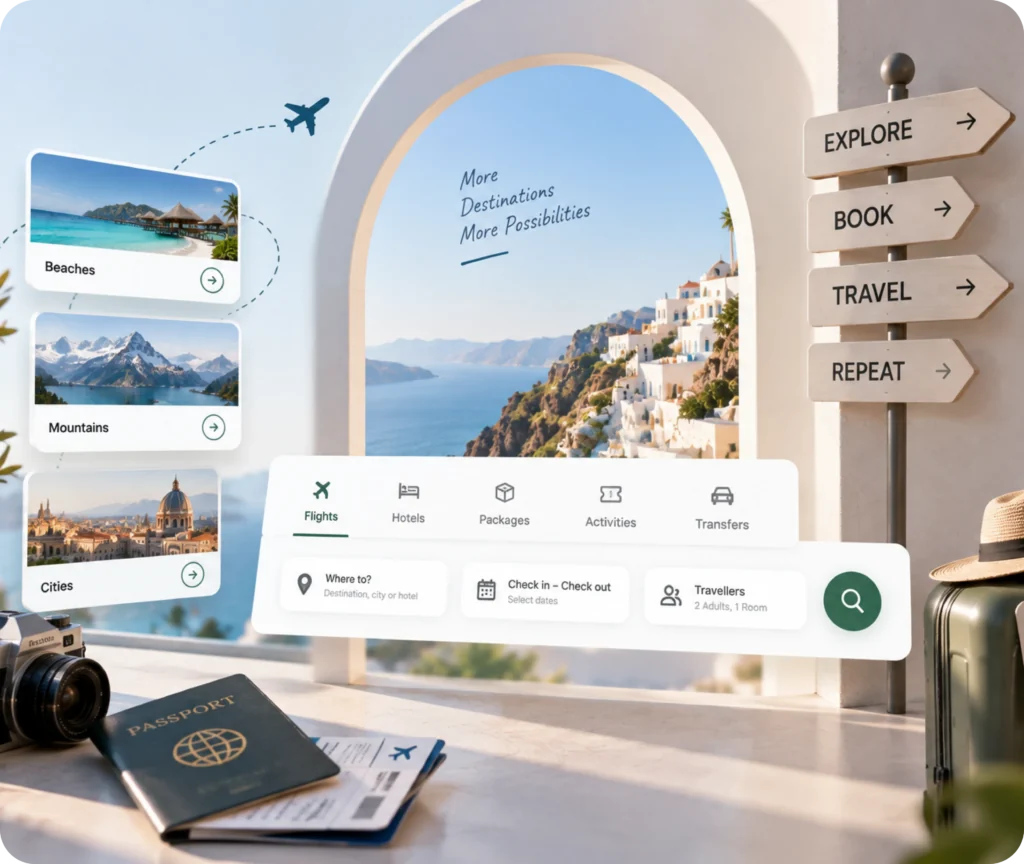
Travel portal development creates a transactional platform for searching, comparing, and booking travel inventory through connected booking and supplier systems.
Automation
Connectivity
Scalability
Our Capabilities
- B2B Travel Portal Development
- B2C Travel Portal Development
- GDS Integration
- Travel API Integration
- Booking Engine Functionality
- Agent Commission Management
- Ticket Booking Workflows

Travel Portal Development
Build a Transactional Travel Booking Platform
Travel portal development is designed for travel businesses that need more than a marketing website. It focuses on transactional functionality for searching, comparing, booking, and managing travel inventory through connected systems.
01
What Does It Include?
A travel portal can support online search and booking workflows for flights, hotels, cars, activities, and packages. Depending on the business model, the platform can serve agents through B2B functionality or travelers through B2C booking experiences.
02
Why Does It Matter?
Manual booking processes can make it difficult to handle growing booking volumes, serve customers who expect online transactions, or distribute inventory across agent networks. A dedicated portal provides infrastructure for more structured digital booking operations.
03
How Does It Solve the Problem?
Travel portal development connects booking functionality with relevant GDS and supplier systems, allowing available inventory and pricing to flow into the booking experience. Portal features can also support agent management, ticketing, payments, and reporting.
04
Who Is It For?
The service is relevant to travel agencies, tour operators, wholesalers, DMCs, OTAs, and ticketing businesses that need transactional travel functionality. A B2B travel portal for travel agents can support agent networks, while B2C Travel Portal Development can support direct traveler bookings.
Our Approach
Portal projects require the booking model, inventory sources, user journeys, and transaction requirements to be understood before development decisions are made. The final approach depends on the business requirements and the GDS, supplier, payment, and portal capabilities required.
Benefits
Benefits Built Around Travel Operations
A dedicated travel portal connects online booking needs with operational workflows. It can help organize transactions, inventory access, and distribution.

Online Booking
Give travelers or agents a structured way to search and book travel inventory.

Live Inventory Access
Connect relevant supplier systems to support current availability and pricing.

Agent Distribution
Support B2B booking operations across travel agents and sub-agents.

Direct Sales
Provide a B2C booking experience for travelers seeking online transactions.

Booking Management
Organize ticketing, cancellation, and reissue workflows within the portal.

Business Visibility
Centralize booking, sales, and commission information for business oversight.
Ready to Plan Your Travel Booking Platform?
Free UX Audit
Start with your business model, booking requirements, and required travel integrations.

Portal Development Process
From Requirements to Travel Portal Launch
A travel portal typically moves from business requirements through technical planning, integration, development, testing, and launch.
01
Requirements Planning
02
Technical Scoping
03
Portal Architecture
04
Booking Development
05
Integration Work
06
Workflow Testing
07
Launch Preparation
Step 01
Define the Booking Requirements
Define the booking model, user types, inventory needs, and operational requirements. This establishes the scope for the portal.
Step 02
Plan the Required Integrations
Identify the GDS, supplier APIs, payment requirements, and booking functionality involved. This helps clarify integration requirements.
Step 03
Structure the Portal
Plan how users, inventory, bookings, payments, and administrative functions connect. The structure supports the required booking experience.
Step 04
Build Booking Functionality
Build the required search, comparison, booking, and management functionality. The portal is structured around the selected business model.
Step 05
Connect Travel Systems
Connect relevant travel inventory and transaction systems. Integrations allow the portal to work with required external services.
Step 06
Test Booking Workflows
Test booking journeys, ticketing actions, cancellations, reissues, and related functions where included. Testing helps identify issues before launch.
Step 07
Prepare for Launch
Review the completed portal and prepare it for production use. The final launch scope depends on the project requirements.
Comparison
Why Travel Portal Development Needs Specialization
A standard business website can present travel services, but transactional portals require booking logic, inventory connectivity, and operational workflows.
Without Qrolic: Basic SEO Approach
Without Qrolic :
- Service information and enquiry forms
- Static travel content
- Manual booking handling
- Limited agent functionality
- Basic customer journey
- Manual ticket management
- Limited operational reporting
With Qrolic: Wellness SEO Approach
With Qrolic :
- Search and booking functionality
- Connected travel inventory
- Structured online booking workflows
- B2B agent portal functionality
- B2C booking experience
- Ticketing workflow support
- Booking and commission reporting
Case Studies
Travel Portal Projects and Experience
This page does not include project results, client names, testimonials, or performance metrics because no verified travel portal case-study information was supplied.
Building the First TailoredPay Payment Gateway Plugin for WordPress & Gravity Forms
Overview TailoredPay had no existing WordPress integration available — not…

Uketa Support – Multi-Language Immigration Platform with Secure Cross-Site Payments
Overview Uketa Support is a multi-language immigration assistance platform built…

My Passport Center – Immigration Platform with Secure Payment Infrastructure
Overview My Passport Center is a high-volume immigration services platform…

Martens – Employment Hero API Integration for WordPress
Overview Martens required a custom careers platform capable of pulling…

First Pass Airport Services – Google Maps Distance Pricing Integration
Overview First Pass Airport Services operates a luxury chauffeur service…

Drip Hydration UK Case Study – HIPAA-Aligned LatePoint Data Encryption
Overview Drip Hydration UK operates a healthcare-focused appointment booking platform…

Custom Brevo API Integration for WordPress — Transactional Emails & Workflow Automation
Overview The client’s immigration platforms relied on WordPress wp_mail for…

Automated WordPress File Migration to S3-Compatible Cloud Storage
Overview The client’s immigration platform was generating hundreds of PDFs…

Azure OCR Integration for WordPress – Custom Document Scanning & Auto-Fill Plugin
Overview The client’s immigration platforms required users to manually enter…

Building a Frontend Application Management Dashboard for WordPress
Overview Managing hundreds of applications directly from the WordPress admin…
Why Choose Qrolic
Travel-Focused Portal Development Needs
Travel portal projects involve more than presenting travel services online. They require clear consideration of booking, inventory, agent, and transaction requirements.
0+
Years of WordPress
Delivering top-tier digital services across design, development, and performance.
0+
Happy Clients
Serving global brands with a 95%+ satisfaction rate across industries.

0%
Client satisfaction
We’re committed to delivering solutions that truly make an impact.
0+
Team members
A strong team of experts in WordPress, web technologies, and UI/UX.
Start Your Portal Project
Discuss Your Travel Portal Requirements
Share your business model, booking needs, inventory requirements, and integration considerations. These details help define the right portal scope.
Curious About the Cost? Free
Our website cost calculator is built using real
project data – no guesswork, just honest pricing.


Curious About the Cost? Free
Just drop your requirements on WhatsApp, and we’ll send you an instant estimate—no forms, no waiting.
Frequently Asked Questions
Travel Portal Development FAQs
Travel portals involve different requirements from standard travel websites. These answers cover common questions around B2B, B2C, booking, and integrations.
What is a travel portal development service?
Travel portal development creates a transactional travel platform for searching, comparing, booking, and managing travel inventory. Unlike a standard marketing website, a portal can connect booking functionality with GDS and supplier systems.
What is a B2B travel portal for travel agents?
A B2B travel portal for travel agents provides a platform where agents or sub-agents can access travel inventory and manage bookings. Depending on the required scope, B2B functionality can include agent accounts, commissions, markups, credit controls, and booking management.
What is B2C travel portal development?
B2C Travel Portal Development focuses on a public-facing booking experience for travelers. It can support search, comparison, booking, and payment journeys designed for direct customer transactions.
What is GDS integration in travel portals?
GDS integration connects a travel portal with global distribution systems that provide travel inventory and related booking data. The specific GDS used depends on the requirements and integrations defined for the project.
Can a travel agent ticket booking portal handle cancellations?
A travel agent ticket booking portal can be designed around ticket booking, cancellation, and reissue workflows where these functions are included in the project scope. The exact workflow depends on the connected inventory and booking systems.
What is travel API integration used for?
Travel API integration connects a portal with external travel suppliers and services. Depending on the required scope, APIs can provide access to flights, hotels, cars, activities, or packages for use within the booking platform.